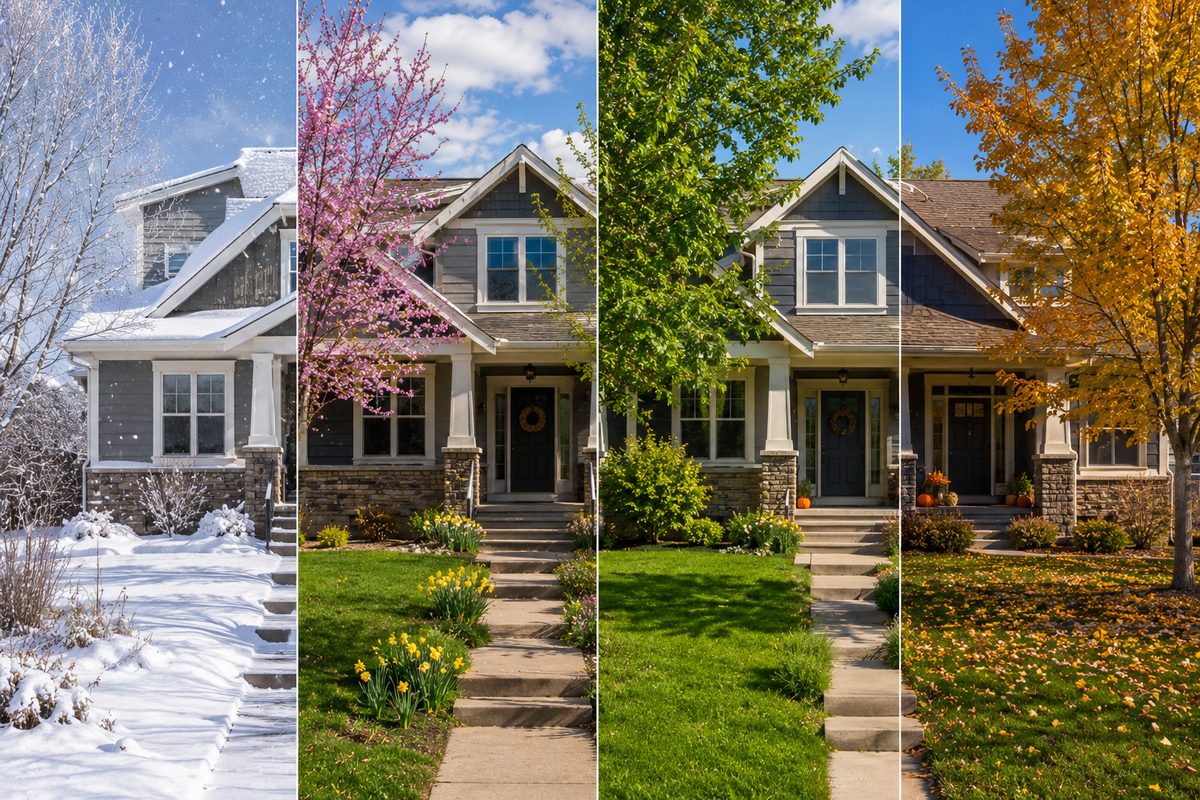
If you're a homeowner in Fort Collins, Windsor, or anywhere in Northern Colorado, you already know: Colorado weather plays by its own rules. Warm afternoons, surprise hailstorms, late-spring freezes, and UV radiation that's 10–15% more intense than lower-elevation states — it all affects how exterior paint performs.
Timing your exterior paint project right isn't just about convenience. It's about getting a finish that actually sticks, cures properly, and lasts.
The Short Answer: May Through September
The ideal window for exterior painting in Northern Colorado runs from mid-May through mid-September. During this stretch, temperatures typically stay in the 50°F–90°F range during application hours, humidity is manageable, and you're past the risk of overnight freeze cycles that can ruin fresh paint.
Paint manufacturers specify a minimum application temperature — usually around 50°F — for a reason. Below that threshold, paint doesn't bond correctly and the curing process breaks down. In Northern Colorado, where freeze-thaw cycles are a real and recurring stress on your home's exterior, a compromised paint job fails faster. Much faster.
Why Spring Books Up Fast
Spring — specifically late May through June — is peak scheduling season for a reason. Homeowners who've been watching their peeling siding all winter are ready to act. Temperatures are right. Days are long. And for homes with significant sun exposure, painting before the peak UV heat of July reduces the chance of blistering during application.
If you want a spring appointment, plan 4–6 weeks out minimum. Waiting until May to call means you're likely looking at a July start date, at the earliest.
Fall Is Underrated — But Has a Hard
Cutoff
August through mid-September is actually one of the best-kept secrets in the Colorado painting calendar. The summer rush has passed, temperatures are still warm, and the light is ideal. Many homeowners also catch issues after a full summer of UV exposure and want them addressed before winter.
The catch: you need to be done and fully cured before overnight temps start flirting with freezing — typically late September into October in the Fort Collins area. Paint that hasn't fully cured before a hard freeze can crack, peel, or fail adhesion within the first year.
What to Watch Out For: Colorado-Specific
Hazards
Wind
Northern Colorado is notoriously windy. Wind accelerates drying — which sounds helpful but actually causes problems. Paint that dries too fast on the surface before curing underneath can wrinkle, crack, or lose adhesion. Wind also carries debris and dust into wet paint.
Humidity and Rain
Colorado is generally a low-humidity state, which is actually favorable for painting. But afternoon thunderstorms in July and August are common. Painting should stop if rain is expected within 24 hours, and fresh paint needs adequate dry time before any moisture exposure.
Direct Sun Exposure
Painting in direct, intense sunlight — especially on south- and west-facing walls — causes the surface temperature to spike well above ambient air temp. This leads to blistering and uneven finish. The solution is to work in the shade, following the sun around the house as the day progresses. Experienced painters in Fort Collins and the surrounding area know this rhythm well.
What About Late Fall or Winter?
Short answer: don't. Even on a warm November day, overnight temperatures in Northern Colorado are too unpredictable. Paint that looks fine at application can fail within weeks once freeze-thaw cycles start doing their work. Colorado sees 28+ freeze-thaw cycles per year — one of the highest in the country — and uncured paint doesn't survive them.
If your home needs painting and it's already October, the better move is to schedule for the following spring, protect what you can over the winter, and start fresh in May.
Plan Ahead, Not Reactive
The homeowners who get the best results — and the best availability — are the ones who plan ahead. A free on-site quote in March or April gets you locked in before the spring rush. It also gives time for proper surface prep planning, which is just as important as the paint itself.
Our 7–10 year paint systems are built for Colorado's specific conditions: the altitude, the UV load, the freeze-thaw stress. But those systems only perform as designed when applied in the right window, with proper prep, by a crew that knows what Northern Colorado throws at a home.
Ready to plan your project? Get a free quote and we'll walk you through timing, prep, and what to expect — before the schedule fills up.