
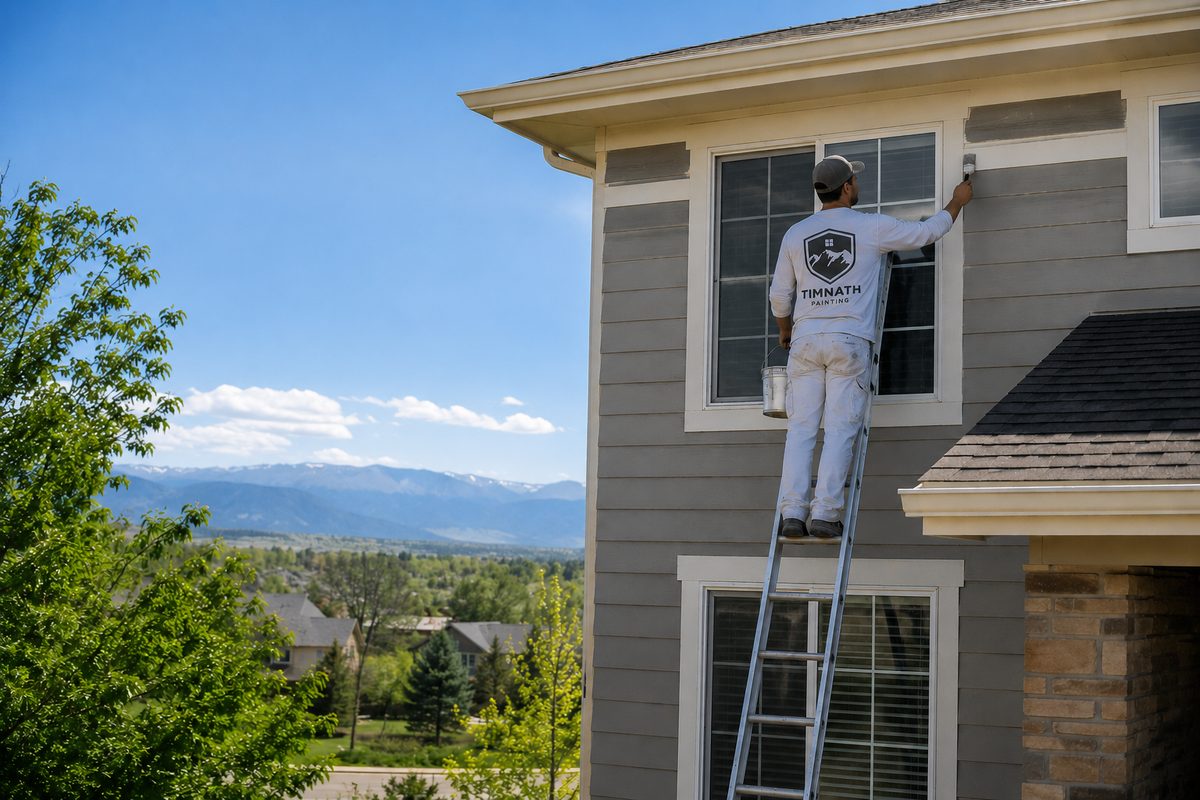
Hiring the wrong exterior painting contractor is one of the most expensive mistakes a homeowner can make. A bad paint job doesn't just look terrible — it peels, cracks, and fails within a year or two, leaving you to pay twice to fix it. In Fort Collins and the surrounding Northern Colorado area, where UV exposure runs 10–15% higher than lower-elevation regions and freeze-thaw cycles punish unprepared surfaces every winter, the stakes are even higher.
So before you hand anyone a deposit, here are the seven things that separate a legitimate exterior painting contractor from one who'll leave you with a mess.
1. Verify Their License and Insurance — Actually Verify It
Any contractor can say they're licensed and insured. Ask for the certificate of insurance and call the carrier to confirm it's active. In Colorado, contractor licensing requirements vary by county, but a credible residential painter will have no problem handing over documentation. At minimum, you want general liability coverage. Look for contractors carrying $1–2M in liability — that protects your property if something goes wrong on the job.
If a contractor hesitates or gives you vague answers here, stop the conversation.
2. Ask About Their Prep Process
This is where most homeowners get fooled. The paint itself is maybe 20% of what determines how long a job lasts. The other 80% is prep.
A quality exterior painting contractor will:
- Pressure wash the entire surface
- Scrape and sand all peeling or flaking areas
- Spot-prime bare wood or repaired sections
- Caulk gaps around windows, doors, and trim
Ask specifically: What does your prep process look like before the first coat goes on? If the answer is vague or they skip over it, the job will show it.
3. Get a Written, Itemized Estimate
A handshake deal is not a contract. Any reputable contractor will give you a written estimate that spells out:
- Number of coats
- Products being used (brand and product line)
- Surface prep included
- What's excluded
- Timeline and payment schedule
If you're comparing bids, make sure you're comparing the same scope. A low bid that skips prep or uses a single coat of cheap paint is not a deal — it's a ticking clock.
4. Check References and Look at Recent Work
Ask for 2–3 references from jobs completed in the last 12–18 months. Don't just collect names — call them. Ask how the crew treated their property, whether the job finished on schedule, and whether the work held up after the first winter.
Better yet, ask if you can see a recently completed job in person. Paint looks very different up close than in photos. Check the edges, the caulk lines, and how paint meets trim. That's where shortcuts show up.
5. Understand What Products Are Going On Your Home
Not all exterior paints perform the same in Colorado's climate. Altitude means stronger UV exposure, which degrades lower-grade coatings faster. Freeze-thaw cycles — 28+ per year in this region — stress paint films through constant expansion and contraction.
Ask your contractor what product line they're using and why they chose it for this climate. A contractor who can't answer that question confidently probably isn't specifying for your conditions — they're just using whatever's cheapest at the supply house.
6. Look for Relevant Credentials
Credentials won't make a bad contractor good, but they signal that someone takes their trade seriously. Look for things like Eco-Painter certification, manufacturer-certified applicator status, or affiliations with the Painting and Decorating Contractors of America (PDCA). These indicate ongoing education and commitment to quality standards.
7. Watch for Red Flags
A few things that should stop you in your tracks:
- Cash-only payment upfront — legitimate contractors don't operate this way
- No physical address — not a PO box, a real business address
- Pressure to sign same day — quality contractors are busy but not desperate
- No written contract — non-negotiable
- Reluctance to provide proof of insurance — walk away
Finding the right exterior painting contractor in Fort Collins, CO takes a little homework, but it's worth it. The difference between a 2-year paint job and a 7–10 year paint job usually comes down to who you hired and how they prepared your home.
If you're ready to get a straight answer on what your project actually needs, request a free on-site quote and we'll walk through the whole job with you — no pressure, no vague estimates.