
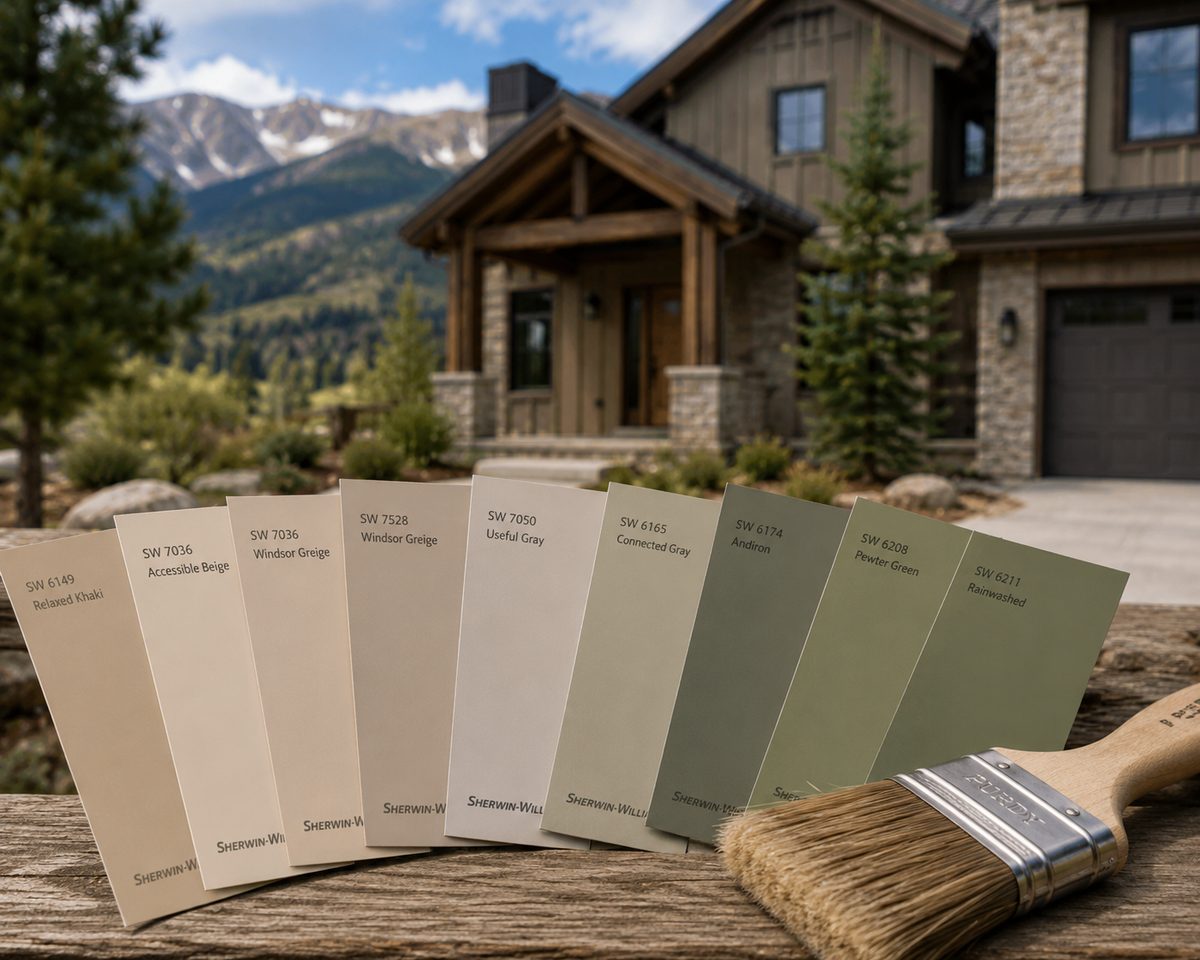
Choosing exterior paint colors sounds like a creative decision — and it is — but it's also a structural one. Get it right and your home looks like it belongs. Get it wrong and it sticks out in the worst way, or worse, it fades and chips inside three years because the color wasn't built for Colorado's climate.
If you're in Fort Collins, Windsor, Timnath, or anywhere in Northern Colorado, you've got a specific set of conditions to work with: intense UV exposure at elevation, 28+ freeze-thaw cycles per year, and neighborhoods that run the full range from traditional ranch homes to modern new builds. Here's a decision framework that actually works.
Start With Your Architectural Style
Your home's architecture is the first filter. A color palette that looks sharp on a craftsman bungalow will feel completely wrong on a stucco Spanish-style home, and vice versa.
- Craftsman and ranch homes tend to work well with earthy tones — warm tans, muted greens, and deep browns. These echo the natural materials (stone, wood accents) that craftsman architecture relies on.
- Modern and contemporary builds can handle bolder contrasts — charcoal siding with bright white trim, or deep navy with black hardware.
- Traditional two-stories in suburban NoCo subdivisions usually stay safe with classic neutrals: greige, warm white, or soft gray with coordinated shutters and trim.
If you're not sure what architectural style your home falls into, look at the roofline, window shapes, and any decorative details. Those elements should guide your palette before you pick up a swatch.
Read the Neighborhood Before You Read the Color Wheel
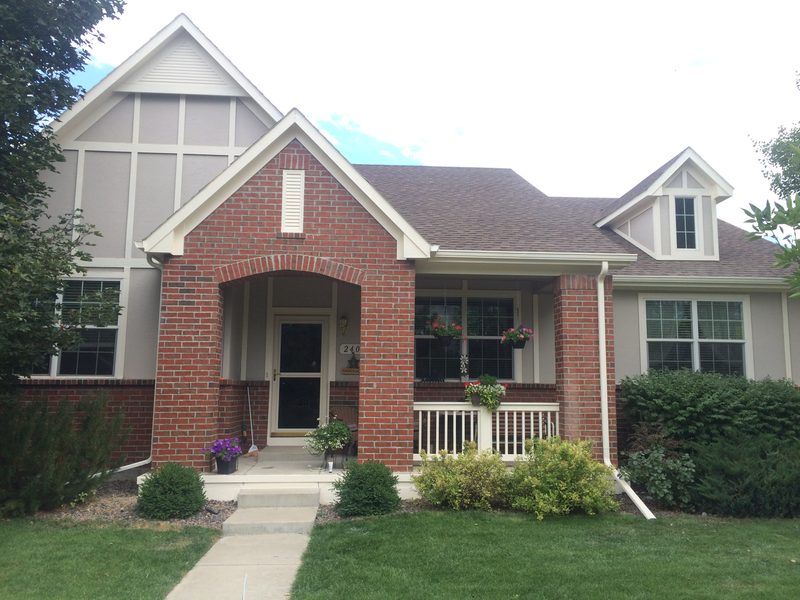
This is the step most homeowners skip, and it's the one that matters most for curb appeal and resale.
Walk or drive your street and look at what works. You're not trying to match your neighbors — you're trying to fit in while standing out slightly. A color that's two shades warmer or cooler than the house next door reads as intentional. A neon green in a row of tans reads as a mistake.
In Fort Collins neighborhoods like Rigden Farm or Bucking Horse, you'll see a lot of warm neutrals and earth tones that complement the Front Range landscape. In newer Windsor or Timnath developments, slightly cooler palettes with gray undertones are common. Match the neighborhood's general temperature — warm vs. cool — and you'll have a lot more flexibility within that range.
If your neighborhood has an HOA, get the approved color list before you fall in love with anything. Many HOA painting projects in NoCo have specific palette requirements that narrow your choices significantly — that's not a bad thing, it's just a constraint to work with early.
Account for Colorado's Light
Northern Colorado light is not like light anywhere else in the country. At altitude, UV intensity runs 10–15% higher than at sea level. That changes two things:
- How colors look on your home. Colors shift dramatically between overcast morning light and midday Colorado sun. A taupe that looks warm and inviting on a cloudy day can look almost yellow in direct afternoon sun. Always test swatches at multiple times of day before committing.
- How fast colors fade. Cheaper paints and dark colors fade faster under NoCo UV exposure. If you're going with a deep charcoal or rich navy, make sure the paint system is rated for high UV environments. This is one reason our exterior painting systems are specifically selected for Colorado conditions — not just pulled from whatever's on sale.
The Three-Color Rule
A proven starting point: body color, trim color, accent color. That's it.
- Body: The dominant color on your siding. Usually the most neutral of the three.
- Trim: Windows, fascia, corners. Typically lighter or darker than the body to add definition.
- Accent: Front door, shutters, or specific architectural details. This is where you can take a small risk — a deep red door or a muted black shutter goes a long way.
Most homes that look "off" are either missing trim contrast or trying to use too many colors at once. Simplify the palette and the home reads cleaner.
Don't Forget Your Landscaping and Hardscape
Your paint colors don't exist in isolation. The concrete of your driveway, the stone on your walkway, the mulch in your beds, and the dominant color of your landscaping all interact with your siding.
Warm-toned stone or brick accents push you toward warm siding colors. Cooler gray concrete and white rock landscaping give you more flexibility with cooler palettes. If your home has a fence, that's another element to factor in — especially if you're planning to stain or refinish it at the same time as your exterior repaint.
Make the Decision With Confidence, Not by Accident
The biggest mistake homeowners make is choosing a color from a 2-inch chip under fluorescent store lighting, then being surprised when it looks completely different on 1,500 square feet of siding in the Colorado sun.
Test your top two or three choices as large swatches directly on your home. Live with them for a few days. Look at them morning, midday, and evening. Then decide.
If you're ready to move forward with an exterior painting project in Fort Collins, Windsor, Timnath, or anywhere in the areas we serve, we offer free on-site quotes and can walk through color options with you during the estimate. We know NoCo's conditions, we know what lasts, and we'll give you a straight answer.