
How Do You Know When It's Time?
Most homeowners don't think about exterior paint until something looks obviously wrong. By then, the damage is usually deeper than the surface. In Northern Colorado, that window between "it looks fine" and "now it's a problem" is shorter than most people expect.
Timnath, Severance, and Windsor sit at around 5,000 feet elevation. That means 10–15% more UV radiation than sea-level cities and 28+ freeze-thaw cycles every year. Your paint takes a beating — and the signs show up faster here than they would in a milder climate.
Here's what to look for when you walk the perimeter of your home in Timnath, Severance, or Windsor.
The Warning Signs — A Visual
Checklist
1. Peeling or Flaking Paint
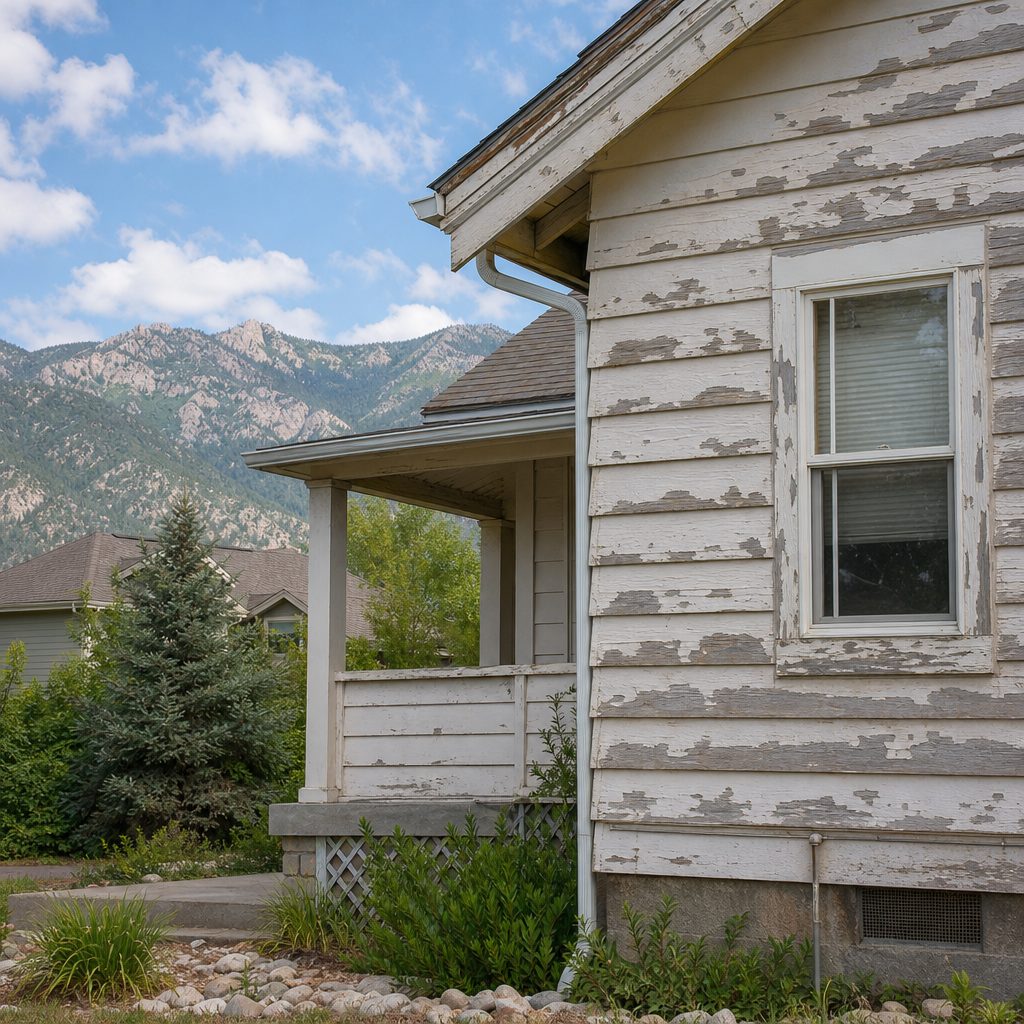
This is the most obvious one. If you see paint lifting away from the surface in sheets or chips, moisture has already gotten underneath. In Colorado's climate, that moisture will freeze, expand, and force more paint off with every cold snap. Don't wait on this one — once the substrate is exposed, you're looking at wood rot risk.
2. Chalking
Run your hand along your siding. If you pull back a white, powdery residue, that's chalking — a sign the paint's binders have broken down from UV exposure. Some chalking is normal over a long lifespan, but heavy chalking means the paint film is no longer doing its job. At altitude, UV degradation accelerates this process noticeably faster than it would at lower elevations.
3. Fading or Uneven Color
Step back and look at your home from the street. Does the south-facing side look noticeably lighter than the north? Colorado's intense sun will bleach exterior paint unevenly, and severe fading usually means the protective resins in the top coat are gone. A fresh coat isn't just cosmetic at this point — it's a moisture barrier.
4. Cracked or Missing Caulk
Check the caulk lines around windows, doors, trim transitions, and anywhere two materials meet. Cracked, shrunken, or missing caulk is one of the most common causes of water intrusion in Northern Colorado homes. When caulk fails, water gets in — and when that water freezes, it expands into the framing. Recaulking is part of any quality exterior painting project for exactly this reason.
5. Moisture Stains or Dark Spots
Discoloration, dark streaking, or soft spots on your siding often point to moisture damage. This can come from failed caulk, poor drainage, or simply paint that's no longer sealing properly. If the wood feels soft when you press on it, you're past the paint conversation — but if you catch it early, a proper prep and repaint can stop the progression.
6. Bubbling or Blistering
Bubbles under the paint surface happen when moisture or heat gets trapped beneath the film. In Colorado, this is especially common on south and west exposures where afternoon heat is intense. Blistering almost always means the paint system has failed and needs to be stripped back before repainting — not just painted over.
7. Visible Bare Wood
If you can see raw wood anywhere on your siding, trim, or fascia boards, that area is completely unprotected. UV damage, moisture absorption, and eventual rot happen fast once wood is exposed. This is the most urgent item on the checklist.
The Colorado Factor
If your home's paint is more than 7–10 years old and you're seeing even one of these signs, it's worth getting an evaluation. Standard paint jobs in milder climates might stretch 10–15 years. At the elevation and freeze-thaw exposure common to Timnath, Severance, and Windsor, that timeline compresses.
The good news: catching it at the warning-sign stage is significantly cheaper than catching it after the wood has been compromised.
What Happens During a Quality Repaint
A paint job that lasts in this climate starts with prep — cleaning, scraping, recaulking, and priming bare spots before a single drop of finish coat goes on. Skipping prep is why so many repaints fail within two or three years.
At Timnath Painting, we use paint systems specifically selected for Northern Colorado's conditions — designed to flex through freeze-thaw cycles and resist UV fade. The result is a 7–10 year system lifespan rather than the 3–5 years you'd get from a budget job. You can browse recent work in our gallery to see what that looks like in practice.
Ready to Take a Closer Look?
If you've spotted one or more of these signs on your home, don't wait until next spring. We offer free on-site quotes across Timnath, Severance, Windsor, and the surrounding Northern Colorado communities we serve.
Contact us to schedule your walkthrough — no pressure, just an honest assessment of where your home stands.