
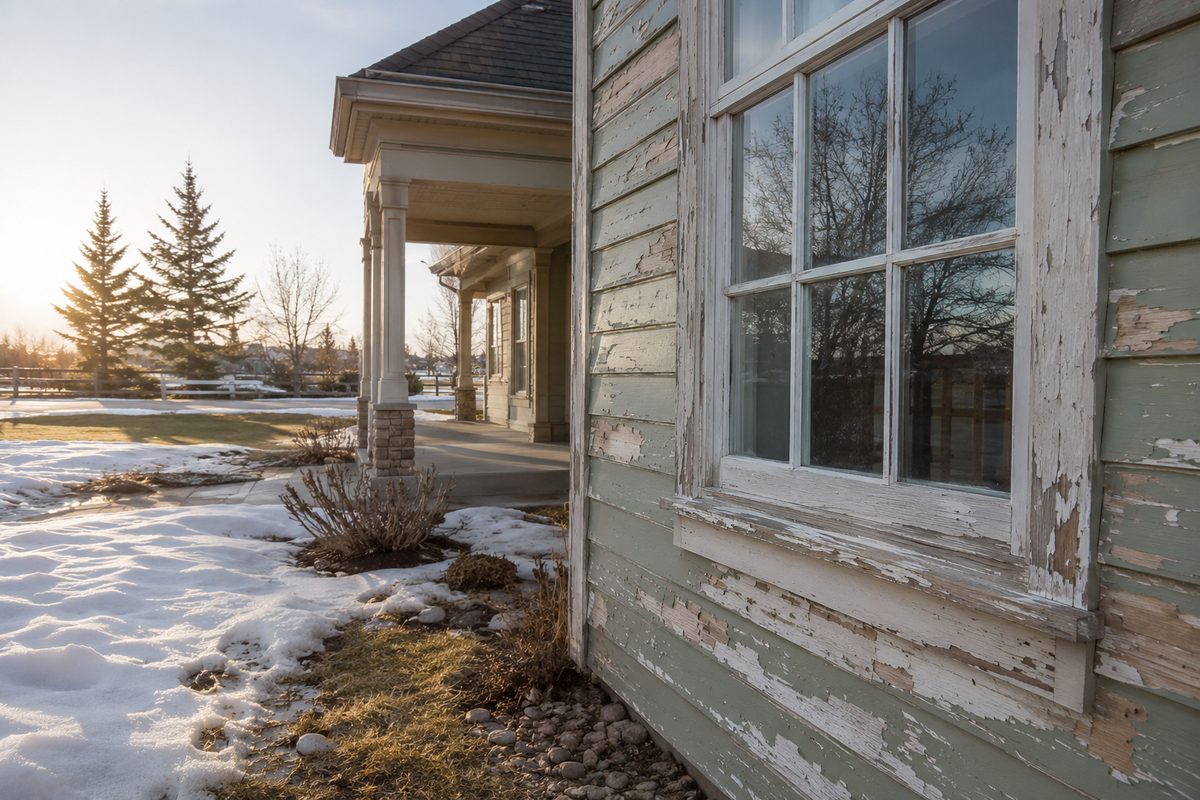
Every spring on the Front Range follows the same pattern: the snow pulls back, temps climb into the 50s, and homeowners start noticing things. Peeling trim. Faded siding. Hairline cracks around windows that weren't there last fall.
That's not coincidence — that's Northern Colorado winter doing what it does. If you're thinking about a spring exterior painting project in Fort Collins or the surrounding area, this guide walks you through exactly what to look for, how to decide what needs repair vs. a full repaint, and when to get on the schedule before the season books out.
What Freeze-Thaw Cycles Actually Do to Paint
Most homeowners know Colorado winters are rough. What's less obvious is the mechanism causing the damage.
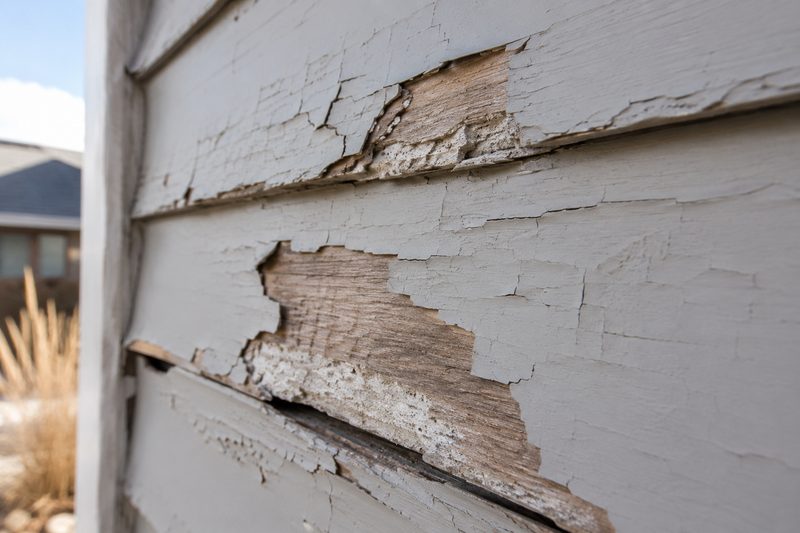
At elevation, the Front Range sees 28+ freeze-thaw cycles per year — meaning temperatures swing above and below freezing repeatedly across a single season. Every time moisture infiltrates your siding and then freezes, it expands. When it thaws, it contracts. That repeated expansion and contraction stresses paint film, causes adhesion to fail, and eventually leads to cracking, bubbling, and outright peeling.
Add in UV radiation that runs 10–15% higher than lower-elevation regions and you've got a paint-destroying combination that most out-of-state contractor advice simply doesn't account for.
Paint systems that weren't formulated with these conditions in mind — or that were applied without proper prep — rarely make it more than 4–5 years. Our exterior painting systems are spec'd specifically for this climate, which is why we stand behind a 7–10 year lifespan.
The Spring Inspection: What to Check
Before you call anyone, walk the perimeter of your house and look for these:
Peeling, Cracking, or Bubbling Paint
This is the most obvious sign. Pay close attention to areas that hold moisture — around windows, under roof overhangs, near ground-level siding. Cracking that runs along wood grain usually means the wood substrate has been cycling too. Bubbling often points to trapped moisture.
Chalking
Run your hand across the siding. If it comes away with a chalky residue, the paint binder has broken down from UV exposure. Mild chalking is normal after years of sun. Heavy chalking means you're past the protection threshold.
Checking Around Caulk Lines
Caulk around windows, doors, and trim joints takes as much abuse as paint — sometimes more. Look for gaps, shrinkage, or spots where caulk has pulled away entirely. These are water intrusion points that need to be addressed before any painting begins.
Soft or Spongy Siding
Gently press on areas that look suspicious. Soft spots indicate wood rot beneath the surface. This needs to be repaired — not painted over.
Repair vs. Repaint: How to Think About It
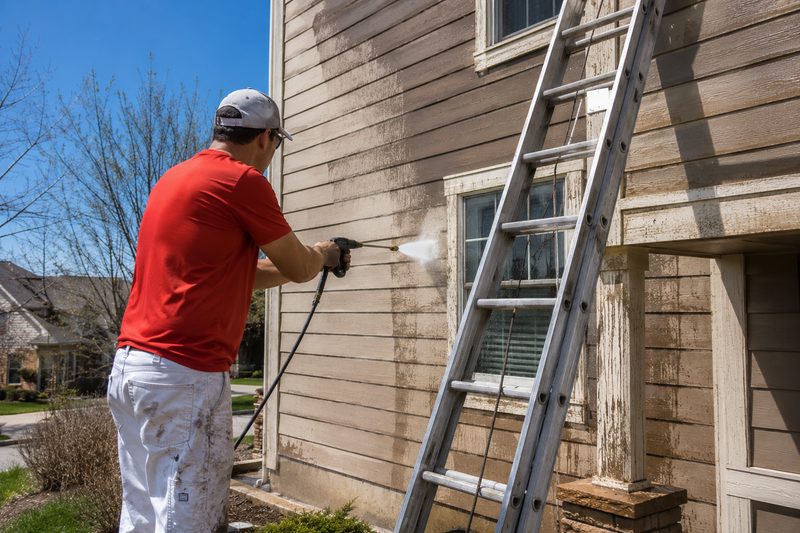
Not everything you find requires a full repaint. Here's a quick framework:
Spot repaint / touch-up candidates:
- Isolated peeling on trim with otherwise solid paint underneath
- Minor caulk gaps with no underlying damage
- Small areas of surface chalking on otherwise sound paint
Full repaint candidates:
- Peeling that's widespread or happening in multiple areas
- Any area with heavy chalking — new paint won't bond well to a broken binder
- Paint that's 8+ years old and showing general fatigue, even if it doesn't look terrible yet
- Any section where moisture has been sitting long enough to raise questions about what's underneath
The honest answer is: if you're finding damage in multiple spots after one inspection pass, spot repairs are usually a short-term fix. The same conditions that caused one area to fail have been affecting the whole surface.
The Spring Booking Timeline on the Front Range
Here's something that catches homeowners off guard every year: quality exterior painters in Fort Collins and Windsor book out fast in spring.
Exterior painting has a narrow seasonal window in Northern Colorado. Paint manufacturers specify minimum application temperatures — typically 50°F and rising — which rules out most of March and early April. Once conditions are right, every contractor's schedule fills quickly.
If you want your project done in May or June, the time to schedule a quote is now — late March through mid-April at the latest. Waiting until you "see how the weather goes" usually means getting pushed to August.
We offer free on-site quotes with no pressure and no obligation. If your home is borderline — some areas holding, some not — we'll tell you honestly what we think needs doing and what can wait.
Ready to Find Out Where Your Home Stands?
If you noticed anything on your spring walkthrough, or if you just know it's been a while, reach out to schedule a free quote. We serve Fort Collins, Windsor, Timnath, and the broader Northern Colorado area.
Spring slots go fast. Getting on the calendar early means better scheduling flexibility and the peace of mind of knowing your home is protected before summer heat and UV take over.