
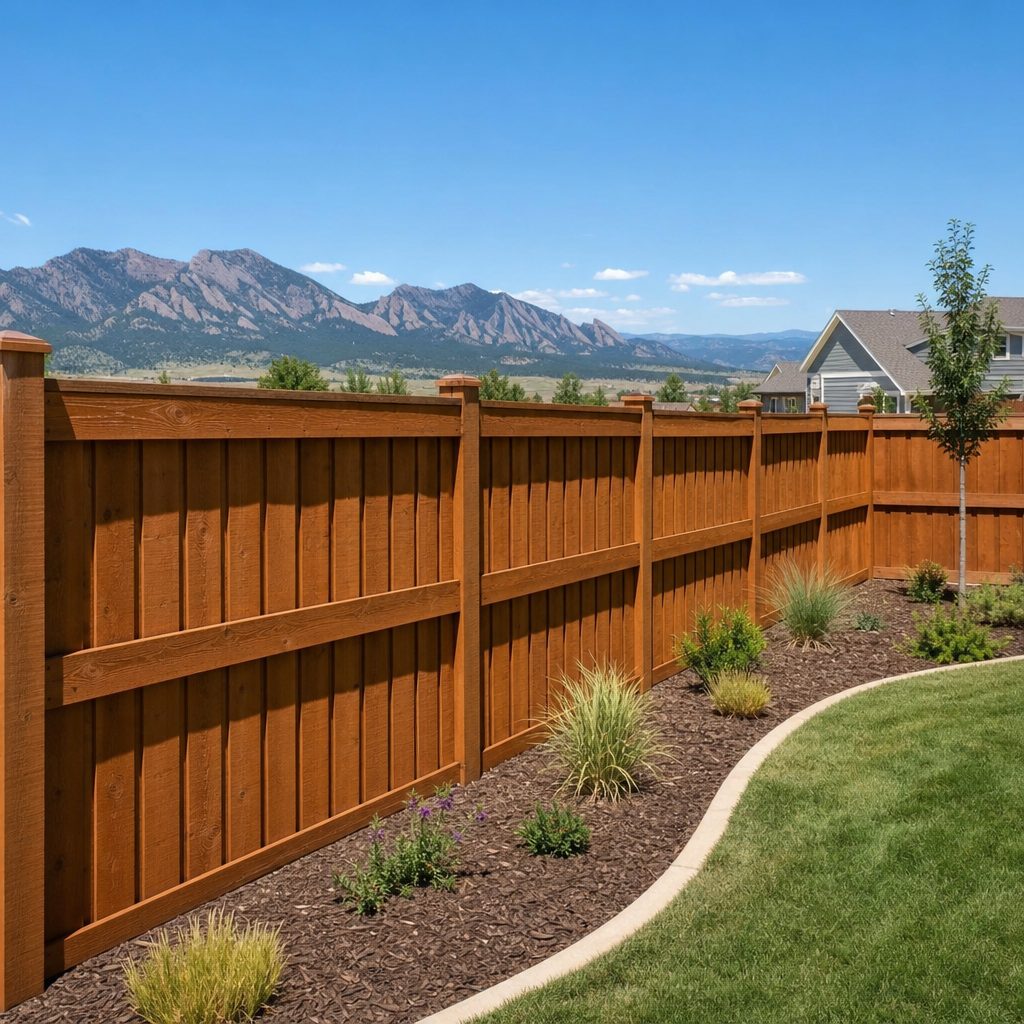
Why Colorado Is Hard on Wood Fences
A wood fence in Fort Collins or Timnath isn't living in a forgiving climate. At altitude, UV radiation hits 10–15% harder than at sea level. Northern Colorado averages 28+ freeze-thaw cycles per year. Add spring moisture and summer heat swings, and untreated wood starts cracking, graying, and splitting faster than most homeowners expect.
The good news: a properly stained fence can last 3–5 years between applications and resist everything Colorado throws at it — if you do it right. This guide covers the full process, start to finish.
Step 1: Wait on a New Fence
This is the mistake we see most often. If your fence was just installed, do not stain it immediately.
New lumber — especially pressure-treated wood — needs time to dry out and cure. Staining too early traps moisture inside the wood, which causes the finish to peel and fail within a season. The general rule:
- Pressure-treated lumber: Wait 6–12 months
- Cedar or redwood: Wait 2–4 weeks minimum, longer if it was kiln-dried
A simple splash test tells you when wood is ready: pour a small amount of water on the surface. If it beads up, the wood is still too wet to stain. If it absorbs, you're good to go.
Step 2: Prep the Surface — Don't Skip This
No stain performs well on dirty, grayed, or weathered wood. Prep is where most DIY fence projects go wrong.
For new or unweathered fences:
- Lightly sand rough spots
- Remove dust and debris
- Let dry completely before applying stain
For existing fences that have weathered:
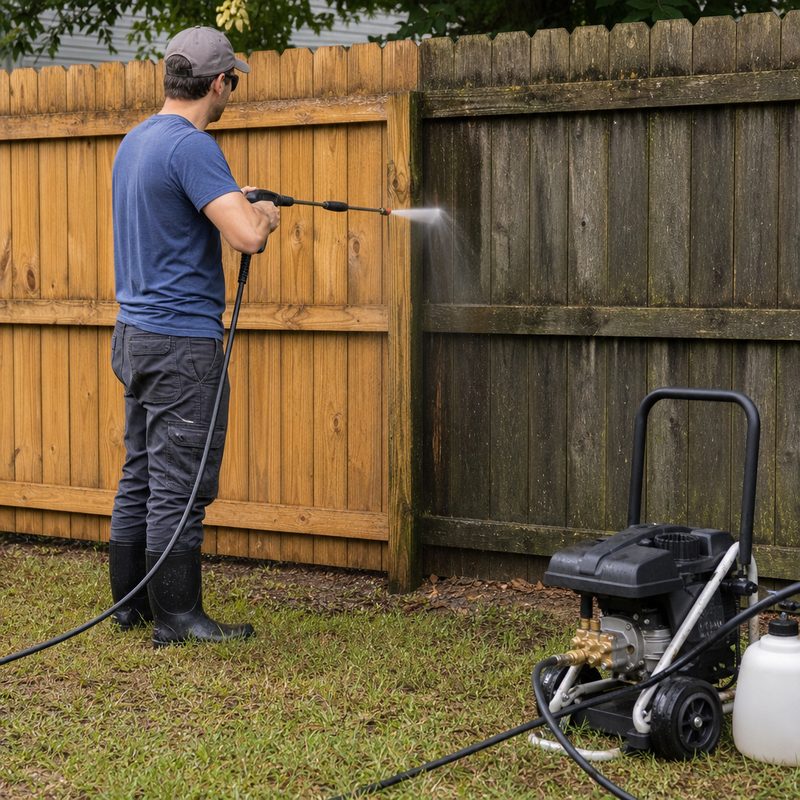
- Pressure wash at 1,200–1,500 PSI (too high strips wood fibers)
- Use a wood brightener or cleaner to remove gray oxidation and mill glaze
- Let dry 24–48 hours — longer in humid conditions
Proper prep is non-negotiable in Colorado. Stain applied over a dirty or damp surface will peel, bubble, or fail to penetrate the wood grain.
Step 3: Choosing the Right Stain
Not all stains hold up equally in high-UV, high-altitude environments. Here's how to think through the options:
Transparent stains show the most wood grain but offer the least UV protection. Fine for decorative applications, but they'll need reapplication every 1–2 years in Colorado.
Semi-transparent stains balance aesthetics and protection. They let the grain show through while adding a pigment layer that deflects UV rays. This is the most popular choice for cedar and natural wood fences.
Solid stains deliver the most protection and longest life. If your fence is already weathered or you want maximum durability, a solid stain is worth considering — though it hides more of the wood character.
Oil-based vs. water-based: Oil-based stains penetrate deeper into the wood grain, which is a real advantage for dry Colorado conditions where wood contracts and expands aggressively. Water-based formulas have improved significantly and clean up easier, but oil-based still tends to outperform on rough-sawn or older wood.
For our fence staining projects across Northern Colorado, we consistently lean toward penetrating oil-based semi-transparent stains for cedar fences — they hold up through the freeze-thaw season better than most alternatives.
Step 4: Application
Timing matters. Apply stain:
- When temps are between 50°F and 90°F
- On a dry day with no rain in the forecast for 24–48 hours
- Out of direct midday sun when possible — hot wood causes stain to dry too fast and lap marks form
Application methods:
- Brush and roller: Most control, best penetration into tight grain. Slower but produces the best finish.
- Sprayer: Fastest for large surfaces. Requires backbrushing to work stain into grain and avoid overspray on neighboring surfaces.
Apply thin, even coats. Two light coats almost always outperform one heavy coat. Follow manufacturer dry times between coats.
Step 5: Maintenance Schedule for Colorado
Even a well-stained fence needs periodic attention. Here's a realistic maintenance timeline for Fort Collins and surrounding areas:
- Year 1: Inspect for peeling, cracking, or graying — especially after the first winter
- Every 2–3 years: Full clean and recoat for semi-transparent or transparent stains
- Every 4–5 years: Solid stains typically hold longer before needing reapplication
Annual cleaning — even just a garden hose rinse in fall — extends life significantly by preventing dirt and mold from breaking down the finish.
Get a Professional Assessment
If your fence is already showing signs of UV damage, deep cracking, or peeling, the right prep work matters more than the product you choose. Getting it wrong wastes time and money.
Our team serves homeowners across Fort Collins, Windsor, Timnath, and greater Northern Colorado with exterior staining services built for Colorado's specific climate demands. We'll tell you honestly whether your fence needs prep work, how long to wait on a new install, and which product makes sense for your wood type.
Contact us for a free on-site estimate — no pressure, just straight answers.